
Rice Blast Disease: Unmasking the Threat of Pyricularia oryzae
Rice Blast Disease
Rice blast disease, caused by Pyricularia oryzae (previously P. grisea) and its sexual form Magnaporthe grisea, was first identified in China in 1637, followed by its recognition in Japan in 1704. In Italy, the disease, known as “Brusone” was reported in 1828 and later in the United States in 1876. In India, the disease was first documented in 1918 in the Tanjore district of Tamil Nadu.
Economic importance
The pathogen can lead to yield reductions between 30% and 61%, depending on the timing of the infection. In extreme cases, it can result in losses of 70-80% of the total grain yield.
Symptoms
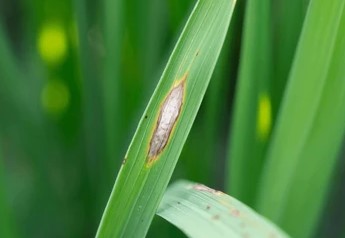
The fungus impacts the crop at every growth stage, from the seedling phase in the nursery to the heading stage in the main field. It typically manifests symptoms on leaves, leaf sheaths, rachis, nodes, and even the glumes, which are also susceptible to attack.
Leaf blast
Node blast
Infected nodes display irregular black lesions that encircle them. These affected nodes can break apart, leading to the death of all plant parts above the infected area, a condition known as node blast.
Neck blast
Etiology
Disease cycle
Mycelium and conidia present in infected straw and seeds serve as key sources of primary inoculum. Seed-borne inoculum fails to initiate the disease in the plains during June because of the high soil temperatures. In both tropical and temperate climates, the fungus survives over winter in straw heaps or stored grain. In tropical regions, the fungus can also persist by infecting collateral hosts such as Panicum repens, Digitaria marginata, Brachiaria mutica, Leersia hexandra, Dinebra retroflexa, Echinochloa crusgalli, Setaria intermedia, and Stenotaphrum secondatum. The grass hosts and early-planted paddy crops are likely the primary reservoirs for the pathogen’s survival and disease initiation. The disease cycle is brief, with most damage occurring from secondary infections. Conidia can travel long distances via air currents, typically being released at night when dew or rain is present, facilitating secondary spread.
Favourable Conditions
The excessive use of nitrogenous fertilizers, along with intermittent rainfall, overcast skies, and high humidity levels (93-99%), creates favorable conditions for the disease. Additionally, low night temperatures (ranging from 15-20°C or below 26°C), an increased number of rainy days, prolonged dew periods, slow wind movement, and the presence of collateral hosts all facilitate the growth and transmission of the pathogen.
Forecasting of the Blast
Management Strategies for Blast Disease
In conclusion, Blast disease of rice, caused by the fungus Pyricularia oryzae (sexual stage Magnaporthe grisea), poses a significant threat to rice production, with yield losses ranging from 30-61%, and in severe cases, up to 70-80%. The disease affects all stages of rice growth, manifesting in symptoms such as leaf, node, and neck blasts. Environmental factors, including high humidity, low temperatures, and excessive nitrogen application, favor disease development. Effective management strategies include using disease-free seeds, growing resistant varieties, proper spacing, and judicious fertilizer use. Seed treatments with fungicides and biocontrol agents like Trichoderma viride and Pseudomonas fluorescens, along with regular fungicide applications, can help reduce the disease’s impact. Accurate forecasting models also aid in timely intervention to control the spread of the disease.
FAQS
What is the cause of blast disease in rice?
Based on my research and experience, blast disease in rice is caused by the fungus Pyricularia oryzae, which overwinters in infected rice seeds and rice stubble. The disease spreads through fungus reproductive structures called spores, originating from these sources and infecting rice plants during the next growing season, thus initiating new infections and perpetuating the cycle.
Why is rice blast called rich man’s disease?
From the historical reports, rice blast disease was first documented in China in 1637 and later in Italy in 1706, where it was known as Brusone due to the burnt appearance of affected fields. It earned the nickname rich man’s disease or rice fever disease because it tends to occur in conditions of high temperature, affecting crops in more prosperous farming areas.
How to avoid rice blast?
From practical agricultural strategies, cultural control methods such as crop rotation with non-host crops can effectively break the disease cycle. Maintaining proper field sanitation by removing crop residues, ensuring balanced fertilization while avoiding excessive nitrogen, managing water to avoid prolonged leaf wetness, and planting resistant rice varieties when available are key to minimizing blast outbreaks.
How do farmers detect rice blast early?
In managing rice blast, a fungal disease that threatens both yield and quality, farmers increasingly rely on timely detection methods to control its spread. One promising approach involves using unmanned aerial vehicles (UAVs) equipped with optical remote sensing technology to monitor the disease efficiently in field environments.
What is another name for rice blast?
Known scientifically as Magnaporthe grisea, this plant-pathogenic fungus is also referred to by many names including rice blast fungus, rice rotten neck, rice seedling blight, blast of rice, oval leaf spot of graminea, pitting disease, ryegrass blast, Johnson spot, neck blast, wheat blast, and in Japan as Imochi (稲熱). It serves as a model organism causing a serious disease that severely affects rice crops.